When supply chains struggle to respond to disruption, outdated technology is often blamed. Recent IDC research suggests the reality is more complicated.

The April 2026 IDC Analyst Brief, AI-Powered Cloud ERP for Supply Chain, sponsored by SAP, examines the pressures affecting supply chains and the factors that can limit an organisation’s ability to respond. Drawing on IDC research, including its April 2025 Global Supply Chain Survey, the brief points to a combination of supplier constraints, operating priorities, legacy technology, integration gaps and limited visibility.
According to IDC’s April 2025 Global Supply Chain Survey, more than 75% of companies identified macroeconomic issues – either general economic uncertainty or tariffs specifically – as their top concern over the next five years. Among operations leaders, that figure rises to 82%.
For supply chain leaders, the challenge is therefore not simply anticipating disruption. It is understanding what might prevent the organisation from responding effectively when conditions change.
What is preventing supply chains from responding faster?
IDC’s Global Supply Chain Survey highlights an important distinction: technology is not the leading reported barrier to supply chain responsiveness.
Of the 1,848 respondents:
- 42% identified supply chain partner constraints – the inability of suppliers or partners to adapt or meet new requirements;
- 35% said their organisation had focused on cost efficiency at the expense of resilience;
- 28% cited legacy or on-premises applications that were neither flexible nor scalable;
- 27% identified a lack of integration between newer applications and legacy implementations;
- 25% pointed to investment in disparate process or vendor applications rather than alignment around key platforms; and
- 23% identified insufficient supply chain visibility.
Skills and internal collaboration were also identified as barriers.
Taken together, the findings show why supply chain responsiveness cannot be addressed through technology alone. Supplier capabilities, operating decisions, systems, information and people can all affect how quickly an organisation is able to react.
Efficiency and resilience need to work together
Notably, 35% of respondents said their organisation had focused on cost efficiency at the expense of resilience.
Cost and efficiency remain essential supply chain priorities. However, decisions designed to optimise normal operations also need to consider how well processes can adapt when circumstances change.
For supply chain leaders, this means understanding where operating models have become difficult to adjust, where dependencies restrict available options and where greater flexibility could improve the organisation’s ability to respond.
Technology can support that objective through better planning, visibility and access to operational information. But resilience ultimately depends on how the wider supply chain is designed and managed.
Disruption rarely stays within one part of the supply chain
A change in demand can affect material requirements, suppliers, production schedules, warehouse activity, transport requirements, workforce allocation and financial forecasts.
The same applies to disruption. A problem originating in one area can quickly create consequences elsewhere.
This makes the movement of information between supply chain functions particularly important. If planning, procurement, manufacturing, warehousing and logistics cannot see relevant changes quickly enough, understanding the wider operational impact and deciding how to respond becomes more difficult.
A responsive supply chain therefore requires more than effective individual functions. Information and processes need to support decisions across the wider operation.
Visibility must lead to action
Supply chain visibility is frequently discussed as an objective, but seeing a problem only creates value if the organisation can act on that information.
The IDC Analyst Brief identifies access to the right breadth and depth of data and insight as a significant issue for supply chain leaders. It also highlights the importance of enabling operational employees to use data and analytics within the timescales required for their roles.
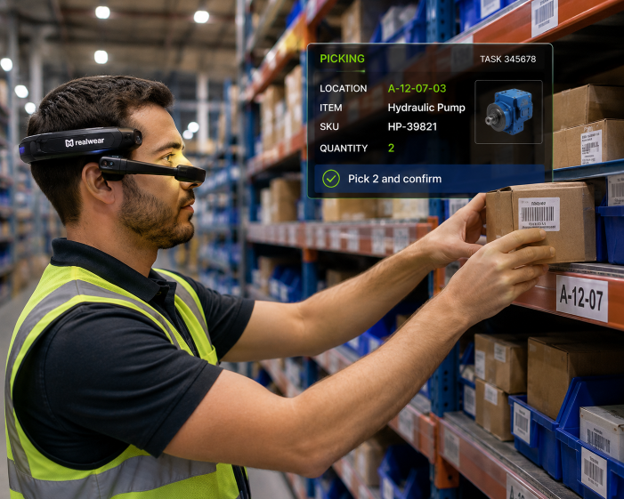
Different roles need different information. A warehouse manager, for example, needs accurate inventory and product-flow information at the point of work. A planner needs information that supports planning decisions, while procurement teams need relevant insight into suppliers and risk.
This is where mobile solutions can help turn visibility into action at an operational level. ODS’s myWarehouse, for example, supports mobile inventory and warehouse management processes for organisations using SAP. For an example of the solution in action, discover how ODS helped a leading American chemical company streamline its warehouse operations.
The objective is not simply to provide more data. It is to make relevant information available where and when decisions must be made.
The role of ERP in a responsive supply chain
ERP can address some of the technology constraints identified in IDC’s research, particularly where legacy applications, integration gaps and disparate systems restrict access to operational information.
For organisations using SAP, SAP S/4HANA Cloud can provide an integrated ERP foundation for core business and supply chain processes.
However, ERP modernisation alone does not create supply chain resilience.
Organisations still need to decide which processes should be standardised, which existing applications remain necessary, how systems need to integrate and how suppliers and other external partners fit into the wider operating model.
The purpose of modernisation should therefore be to remove genuine operational constraints and improve the organisation’s ability to respond, rather than treating the move to cloud ERP as an objective in itself.
Where does AI fit?
AI is becoming increasingly relevant to supply chain operations.
The IDC Analyst Brief discusses the role of traditional AI and machine learning in areas such as demand planning, alongside the developing use of generative and agentic AI. According to the survey, more than 37% of companies reported productivity gains of over 10% from applying AI to business processes and workforce capabilities.
For supply chain leaders, the important question is where these capabilities can materially improve the ability to anticipate change, make decisions or respond.
That could include supporting planning, identifying emerging changes or making relevant operational information easier for employees to use.
AI is therefore best considered as part of the wider supply chain capability rather than as a separate objective.
Building responsiveness into the supply chain
Supply chain leaders cannot control every disruption, but they can influence how effectively their organisation responds.
IDC’s findings show that the barriers to responsiveness extend across partners, operating priorities, technology, integration, visibility and skills. Building a more responsive supply chain therefore requires organisations to consider how these factors work together.
Modern ERP, integration, analytics and AI can support that objective by helping organisations identify change sooner and make informed decisions more quickly.
The goal is not to predict every disruption, but to build a supply chain that is better equipped to adapt when the unexpected happens.
How On Device Solutions can help
On Device Solutions is an SAP Gold Partner with SAP Supply Chain Management Advanced Competency, reflecting our recognised expertise within SAP supply chain solutions.
Improving supply chain responsiveness can involve more than one technology decision. Organisations may need to consider ERP, integration, warehouse and inventory processes, enterprise mobility, field operations and asset management as part of the wider SAP landscape.
ODS brings expertise across these areas to help organisations identify where technology is creating operational constraints and determine which SAP and ODS solutions are appropriate to their requirements.
Whether the priority is modernising the ERP environment, improving integration, mobilising warehouse processes or connecting field and asset operations, the starting point is understanding where change can make a meaningful difference.