Enterprise Resource Planning (ERP) has always mirrored the business environment it serves.
In the 1990s, Enterprise Resource Planning was largely about control and standardisation. Organisations implemented monolithic systems, imposed uniform processes, and pursued efficiency above all else. That worked in relatively stable markets, but the world has moved on.

Today, disruption is constant. Supply chains shift overnight, customer expectations change rapidly, and external shocks – whether global events, new regulations, or technological breakthroughs – can reshape entire industries. In this environment, ERP must move beyond resilience. It should not only withstand disruption but also learn from it and grow stronger.
From Monolithic Systems to Clean Core Enterprise Resource Planning
Earlier ERP programmes often tried to force every business unit into one way of working. Mergers and acquisitions left behind a patchwork of processes, which organisations attempted to fit into a single template. While this brought some order, it created rigidity. The moment conditions changed, businesses found themselves unable to adapt quickly.
The shift to cloud platforms, particularly SAP S/4HANA Cloud, has enabled a different approach.
Organisations can now:
- Maintain a clean core, keeping core processes standardised and upgradeable.
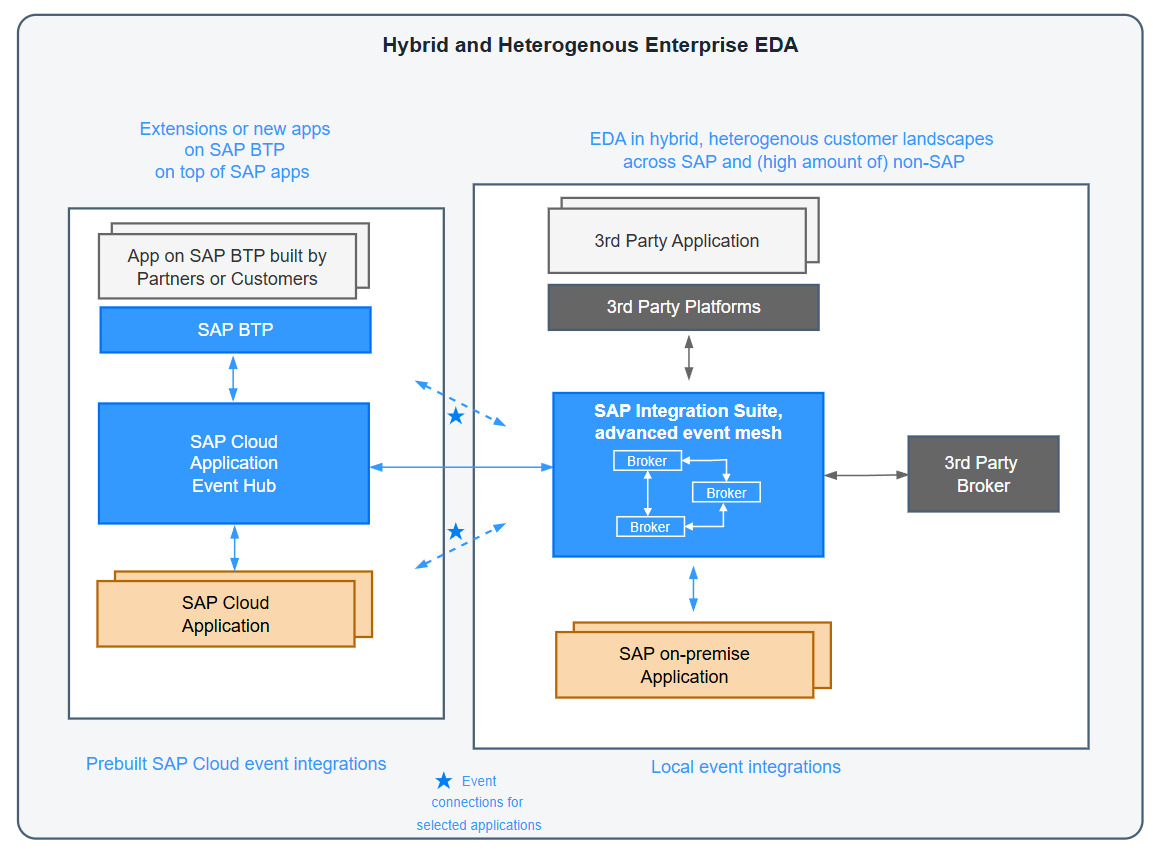
- Push differentiation to the edge using SAP Business Technology Platform (BTP) for extensions, automation, and integrations.
- Scale systems flexibly across public cloud, private cloud, or hybrid environments.
This modularity is what allows ERP to be adaptable, rather than brittle.
Why Data is the Real Foundation
Adaptable ERP depends on trustworthy data. In the past, businesses often tried to centralise everything into one warehouse or data lake. The reality is more nuanced. What matters is:
- Understanding where data resides and how it can be accessed.
- Governing data with clear taxonomy, ownership, and quality controls.
- Orchestrating data across multiple systems, rather than forcing it into a single location.
Once this foundation is in place, AI and machine learning can be applied directly through processes. Instead of dashboards that simply report on the past, AI can highlight risks, surface opportunities, and suggest next steps in real time. This is how ERP becomes proactive, not reactive.
Continuous Process Intelligence
Traditional projects often peaked at deployment, then gradually deteriorated as processes drifted or as business requirements changed. This is what happens when ERP improvement stops at go-live.
Modern ERP can take a different path by embedding continuous improvement:
- Process mining and benchmarking reveal how work actually happens versus how it was designed.
- Insights show where variation is helpful and where it causes risk or inefficiency.
- Processes can be adapted incrementally, creating a cycle of improvement rather than periodic overhauls.
This approach ensures Enterprise Resource Planning remains relevant to business realities, rather than being locked into outdated practices.
Culture is as Important as Technology
Even the most advanced ERP platform will fall short if the organisation is not prepared to adapt. A culture of adaptability includes:
- Empowering teams at all levels to suggest improvements, not just executives.
- Accepting change as constant, rather than clinging to “the way things have always been done”.
- Designing intuitive experiences, so that employees can become productive quickly – especially important as workforce mobility increases.
- Making change safe, using sandboxes, feature flags, and automated testing to experiment without disrupting operations.
Technology enables flexibility, but people must be ready to embrace it.
Practical First Steps
For organisations looking to modernise ERP with adaptability in mind, a phased approach works best:
- Baseline your processes – use discovery tools to see how work really flows and identify where value is lost.
- Ring-fence the core – review customisations that block upgrades and plan to retire or relocate them.
- Focus on data ownership – assign responsibility for master and reference data, with clear quality expectations.
- Target measurable improvements – pick two or three use cases (e.g. reducing invoice exceptions, cutting inventory days) and deliver change in short cycles.
- Embed feedback loops – monitor outcomes continuously and adapt further.
The businesses that succeed in the coming years won’t be those that avoid disruption – they’ll be those whose ERP platforms become stronger because of it. A clean, modular core; safe extensibility at the edge; trustworthy data foundations; continuous process intelligence; and an adaptable culture together create systems that can face uncertainty with confidence.
Enterprise Resource Planning is no longer about resisting change. It is about using change as a catalyst for improvement.
In our recent article, “A Strategic Approach to ERP Transformation with SAP,” we outlined why organisations on legacy systems such as ECC should prioritise moving to cloud ERP and how process-driven methodologies can make the journey smoother. But transformation does not end with migration. Once businesses are live on a modern platform, the real opportunity lies in designing ERP that is not just resilient but adaptable – capable of evolving with disruption and turning change into advantage. This is where the future of Enterprise Resource Planning begins.
Legacy ERP systems weren’t designed for today’s pace of change. But with a clean core, flexible architecture, and the right tools at the edge, modern ERP can evolve alongside your business.
Whether you’re planning a transition to SAP S/4HANA Cloud or looking to extend its value with SAP Business Technology Platform (BTP), we at On Device Solutions help our SAP clients build systems that are not just resilient but also adaptable by design.
Contact Us Here Today to start the conversation about building ERP that turns disruption into opportunity.